Summary
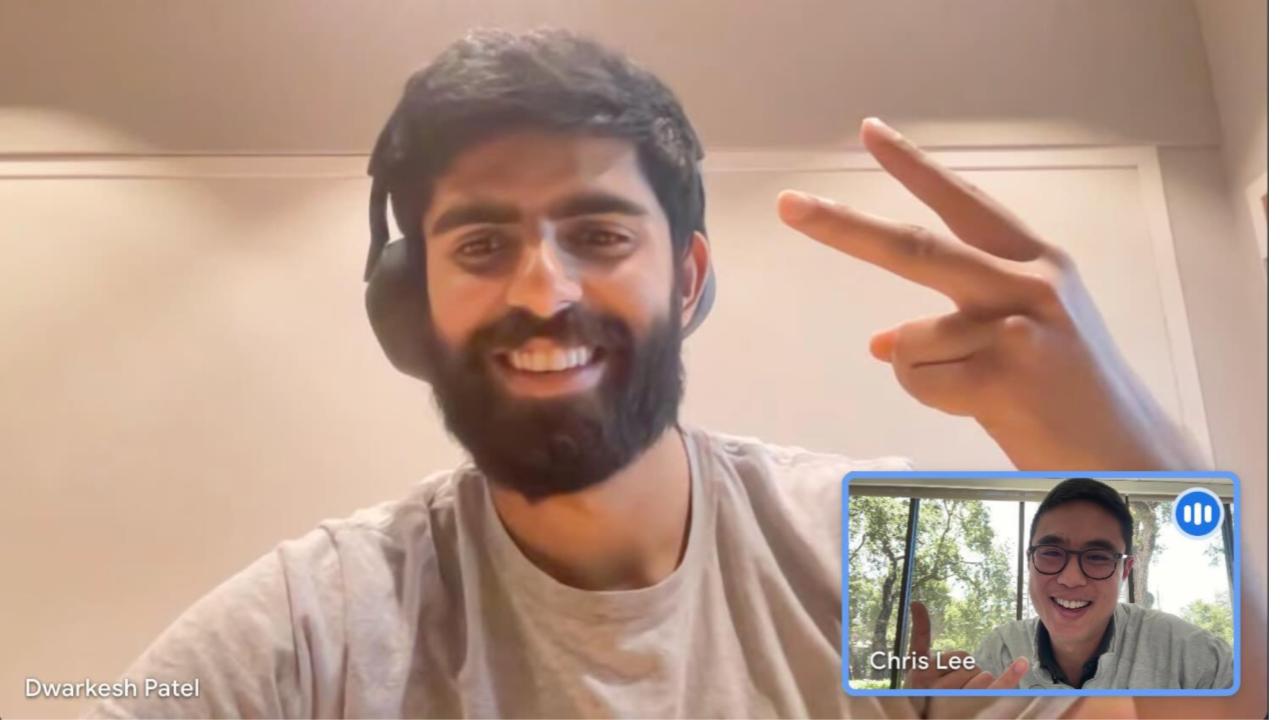
Dwarkesh Podcast: He hosts the Dwarkesh Podcast, where he conducts in-depth interviews with experts and thought leaders.
AI Focus: Patel is particularly known for his focus on artificial intelligence, exploring its various facets and potential implications.
OnAir Post: Dwarkesh Patel
News
My main bottleneck is finding excellent guests.
What I’m looking for in guests
I’m looking for people who are deep experts in at least one field, and who are polymathic enough to think through all kinds of tangential questions in a really interesting way.
So I’m selecting for this synthetic ability to connect one’s expertise to all kinds of important questions about the world – an ability which is often deliberately masked in public academic work. Which means that it can only really come out in conversation.
That’s why I want to hire scouts. I need their network and context – they know who the polymathic geniuses are, who gave a fascinating lecture at the last big conference they attended, who can just connect all kinds of interesting ideas in the field together over conversation, etc.
Dwarkesh Patel – October 17, 2025 (02:26:00)
The Andrej Karpathy episode. During this interview, Andrej explains why reinforcement learning is terrible (but everything else is much worse), why AGI will just blend into the previous ~2.5 centuries of 2% GDP growth, why self driving took so long to crack, and what he sees as the future of education. It was a pleasure chatting with him.
Andrej Karpathy discusses the future of AI, arguing that Artificial General Intelligence (AGI) remains a decade away. This insightful interview covers reinforcement learning’s limitations and the surprising slow progress of self-driving cars. Karpathy also shares perspectives on the future of education and LLMs.
𝐓𝐈𝐌𝐄𝐒𝐓𝐀𝐌𝐏𝐒
00:00:00 – AGI is still a decade away
00:30:33 – LLM cognitive deficits
00:40:53 – RL is terrible
00:50:26 – How do humans learn?
01:07:13 – AGI will blend into 2% GDP growth
01:18:24 – ASI
01:33:38 – Evolution of intelligence & culture
01:43:43 – Why self driving took so long
01:57:08 – Future of education
In a world with over five million podcasts, Dwarkesh Patel stands out as an unexpected trailblazer. At just 23 years old, he has caught the attention of influential figures such as Jeff Bezos, Noah Smith, Nat Friedman, and Tyler Cowen, who have all praised his interviews — the latter describing Patel as “highly rated but still underrated!” Through his podcast, he has created a platform that draws in some of the most influential minds of our time, from tech moguls to AI pioneers.
But of all the noteworthy parts of Patel’s journey to acclaim, one thing stands out among the rest: just how deeply he will go on any given topic.
“If I do an AI interview where I’m interviewing Demis [Hassabis], CEO of DeepMind, I’ll probably have read most of DeepMind’s papers from the last couple of years. I’ve literally talked to a dozen AI researchers in preparation for that interview — just weeks and weeks of teaching myself about [everything].”
About
Overview Short

Extensive Research: He is known for his thorough preparation and deep understanding of the topics he discusses, earning praise from guests like Jeff Bezos and Mark Zuckerberg.
Interviews: He has interviewed a wide range of people, including Mark Zuckerberg, Tony Blair, and Marc Andreessen.
AI Tools for Learning: Patel uses AI tools like Claude to enhance his learning and research processes.
Recognition: He was named one of TIME’s 100 Most Influential People in AI in 2024.
Source: Google AI Overview
Contact
Email: Podcast
Web Links
Videos
AMA ft. Sholto & Trenton: New Book, Career Advice Given AGI, How I’d Start From Scratch
March 25, 2025 (49:33)
By: Patel YouTube
I recorded an AMA! I had a blast shooting the shit with my friends Trenton Bricken and Sholto Douglas.
We discussed my new book, career advice given AGI, how I pick guests, how I research for the show, and some other nonsense.
My book, “The Scaling Era: An Oral History of AI, 2019-2025” is available in digital format now. https://press.stripe.com/scaling
Timestamps:
(0:00:00) – Book launch announcement
(0:04:57) – AI models not making connections across fields
(0:10:52) – Career advice given AGI
(0:15:20) – Guest selection criteria
(0:17:19) – Choosing to pursue the podcast long-term
(0:25:12) – Reading habits
(0:31:10) – Beard deepdive
(0:33:02) – Who is best suited for running an AI lab? (
0:35:16) – Preparing for fast AGI timelines
(0:40:50) – Growing the podcast
I recorded an AMA! I had a blast shooting the shit with my friends Trenton Bricken and Sholto Douglas. We discussed my new book, career advice given AGI, how I pick guests, how I research for the show, and some other nonsense. My book, “The Scaling Era: An Oral History of AI, 2019-2025” is available in digital format now. https://press.stripe.com/scaling Timestamps: (0:00:00) – Book launch announcement (0:04:57) – AI models not making connections across fields (0:10:52) – Career advice given AGI (0:15:20) – Guest selection criteria (0:17:19) – Choosing to pursue the podcast long-term (0:25:12) – Reading habits (0:31:10) – Beard deepdive (0:33:02) – Who is best suited for running an AI lab? ( 0:35:16) – Preparing for fast AGI timelines (0:40:50) – Growing the podcast
February 19, 2025 (01:16:00)
By: Patel YouTube
Satya Nadella on:
- Why he doesn’t believe in AGI but does believe in 10% economic growth,
- Microsoft’s new topological qubit breakthrough and gaming world models,
- Whether Office commoditizes LLMs or the other way around,
Read the transcript: https://www.dwarkesh.com/p/satya-nadella
Books
The Scaling Era: An Oral History of AI, 2019-2025
Source: Amazon
An inside view of the AI revolution, from the people and companies making it happen.
How did we build large language models? How do they think, if they think? What will the world look like if we have billions of AIs that are as smart as humans, or even smarter?
In a series of in-depth interviews with leading AI researchers and company founders—including Anthropic CEO Dario Amodei, DeepMind cofounder Demis Hassabis, OpenAI cofounder Ilya Sutskever, MIRI cofounder Eliezer Yudkowsky, and Meta CEO Mark Zuckerberg—Dwarkesh Patel provides the first comprehensive and contemporary portrait of the technology that is transforming our world.
Essays on Substack
What fully automated firms will look like
Source: Dwarkesh Podcast
Everyone is sleeping on the *collective* advantages AIs will have, which have nothing to do with raw IQ: they can be copied, distilled, merged, scaled, and evolved in ways humans simply can’t.
Internal planning can be much more efficient than market competition in the short run, but it needs to be constrained by some slower but unbiased outer feedback loop. A company that grows too large risks having its internal optimization diverge from market realities.
That said, the balance may shift as AI systems improve. As corporations become more “software-like” – with perfect replication of successful components and faster feedback loops – we may see much larger and more efficient firms than were previously possible.
The market continues to serve as the grounding outer loop. How does the firm convert trillions of tokens of data from customers, markets, news, etc every day into future plans, new products, and the like? Does the board make all the decisions politburo-style and use $10 billion dollars of inference to run Monte Carlo tree search on different one-year plans? Or do you run some kind of evolutionary process on different departments, giving them more capital, and compute/labor based on their performance?
Wikipedia


Dwarkesh Patel (born August 19, 2000) is an Indian-American writer and podcaster based in the United States who hosts the long-form interview show Dwarkesh Podcast, focusing on artificial intelligence, science, and history.[2][3]
Early life
Patel was born in India and moved to the United States when he was 8 years old.[4] His father, a physician, frequently traveled for work. The family moved around the country, living in North Dakota, West Virginia, Maryland, and Texas.[5] While studying computer science at the University of Texas at Austin, Patel began interviewing writers and technologists in 2020 for an early version of his podcast, then called The Lunar Society.[6] He took the name of his show from the Lunar Society of Birmingham, an 18th century British dinner club that was part of an influential intellectual movement known as the Midlands Enlightenment.[3]
Career
The Dwarkesh Podcast features extended conversations with scientists, technology leaders, historians, and economists.[3] On the podcast, Patel has interviewed prominent and diverse figures, including AI researchers such as Andrej Karpathy and Ilya Sutskever, technology leaders such as Mark Zuckerberg, Elon Musk and Satya Nadella, and political figures, including former British prime minister Tony Blair and former British political advisor Dominic Cummings.[7][8]
The podcast has received praise from journalists and technologists.[9] The Economist said in 2025 that Patel "rose from nowhere to become Silicon Valley’s favourite podcaster".[2] The New Yorker referred to the significance of the podcast as "to the doomer crowd what 'The Joe Rogan Experience' is to jujitsu bros, or what 'The Ezra Klein Show' is to Park Slope liberals".[3]
Patel is particularly interested in artificial intelligence, which he considers to be "the most multidisciplinary and intellectually stimulating topic." He was listed as one of the 100 most influential people in AI by Time in 2024.[10]
Patel is the co-author, with Gavin Leech, of the 2025 book The Scaling Era: An Oral History of AI, 2019-2025. The book is mostly composed of parts of interviews from the Dwarkesh Podcast conducted with those involved in contemporary AI research, including Dario Amodei, Demis Hassabis, Mark Zuckerberg, and Leopold Aschenbrenner. Subjects explored include the training of AI models, including the cost of the data centers required to train larger models, the impact on business, scientific research, and AI's potential impact on geopolitics, exploring the ways AI can potentially be used by adversarial countries to attack others, with Aschenbrenner offering an hypothetical scenario of a country with a slight edge using small drones to destroy the nuclear submarines of its enemies. Some interviewed like Amodei and Aschenbrenner openly describe the inability of humans to comprehend the underpinnings and intentions of AI, particularly artificial superintelligence, with Amodei, while discussing AI alignment and AI interpretability, stating "We really have very little idea what we’re talking about." Aschenbrenner further explains the uncertainly, stating that in the millions of lines of code, "you don’t know if it's hacking, exfiltrating itself, or trying to go for the nukes."[11]
In August 2025, Patel organized a fundraiser for charities opposing factory farming. Patel pledged to donate up to $250,000 in matching funds. He and his listeners (including Patrick Collison, Liv Boeree and Noah Smith) raised over $2 million.[12]
Personal life
As of 2024, Patel lives in San Francisco.[7] He has stated that he obtained his U.S. green card shortly before aging out of child-status eligibility.[4]
References
- ^ "Dwarkesh Patel". X. Retrieved December 4, 2025.
Born August 19, 2000
{{cite web}}: CS1 maint: deprecated archival service (link) - ^ a b "The man who has the ear of Silicon Valley". The Economist. April 17, 2025. Archived from the original on April 18, 2025. Retrieved April 17, 2025.
- ^ a b c d Marantz, Andrew (March 11, 2024). "Among the A.I. Doomsayers". The New Yorker. ISSN 0028-792X. Archived from the original on October 7, 2024. Retrieved November 5, 2025.
- ^ a b Mahapatra, Tuhin Das (July 26, 2024). "India-born immigrant shares the days fearing to self-deport from US due to 'ageing out'". Hindustan Times. Retrieved February 15, 2025.
- ^ Segan, Shreeda (February 29, 2024). "The future belongs to those who prepare like Dwarkesh Patel". Mercury. Archived from the original on September 17, 2025. Retrieved November 5, 2025.
- ^ "Interview: The Lunar Society with Dwarkesh Patel". The Roots of Progress. August 28, 2020. Archived from the original on March 22, 2025. Retrieved November 5, 2025.
- ^ a b Shirreff, Lauren (June 26, 2024). "How an unknown podcaster bagged an interview with Tony Blair". The Telegraph.
- ^ "Indian-origin man's cold email to Satya Nadella lands him interview with Microsoft CEO: 'Kids, don't underestimate'". Hindustan Times. February 20, 2025. Archived from the original on February 20, 2025. Retrieved February 24, 2025.
- "Satya Nadella said 'yes' in 4 minutes. How an Indian-origin man landed an interview with Microsoft CEO". The Economic Times. February 20, 2025. ISSN 0013-0389. Archived from the original on February 23, 2025. Retrieved September 6, 2025.
- Ho, Soleil (September 10, 2024). "Why did a major S.F. tech conference just host a panel about making more babies?". San Francisco Chronicle.
- ^ Shipper, Dan (July 24, 2024). "🎧 Dwarkesh Patel's Quest to Learn Everything". every.to. Archived from the original on August 4, 2025. Retrieved November 5, 2025.
- ^ Pillay, Tharin (September 5, 2024). "TIME100 AI 2024: Dwarkesh Patel". TIME. Archived from the original on January 17, 2025. Retrieved January 16, 2025.
- ^ Patel, Dwarkesh (July 29, 2025). Leech, Gavin (ed.). The Scaling Era:An Oral History of AI, 2019-2025. San Francisco: Stripe Press. ISBN 978-1-953953-55-1. OCLC 1535937039.
- Roose, Kevin; Newton, Casey; Cohn, Rachel; Jones, Whitney; Collette, Matt; Moxley, Alyssa; Powell, Dan; Lozano, Marion; Wong, Diane (March 28, 2025). "The Tech Behind Signalgate + Dwarkesh Patel's 'Scaling Era' + Is A.I. Making Our Listeners Dumb?". The New York Times. ISSN 0362-4331. Archived from the original on March 31, 2025. Retrieved April 1, 2025.
- Rothman, Joshua (April 1, 2025). "Are We Taking A.I. Seriously Enough?". The New Yorker. Archived from the original on April 16, 2025. Retrieved April 15, 2025.
- Hutson, Matthew (September 12, 2025). "'These Strange New Minds' and 'The Scaling Era' Analyzing AI's Future". The Wall Street Journal.
- ^ Torrella, Kenny (August 21, 2025). "An unorthodox idea for solving one of the world's most underrated problems". Vox. Archived from the original on August 29, 2025. Retrieved September 6, 2025.
External links
| Authority control databases: National |
|---|