
AI onAir Network of Hubs
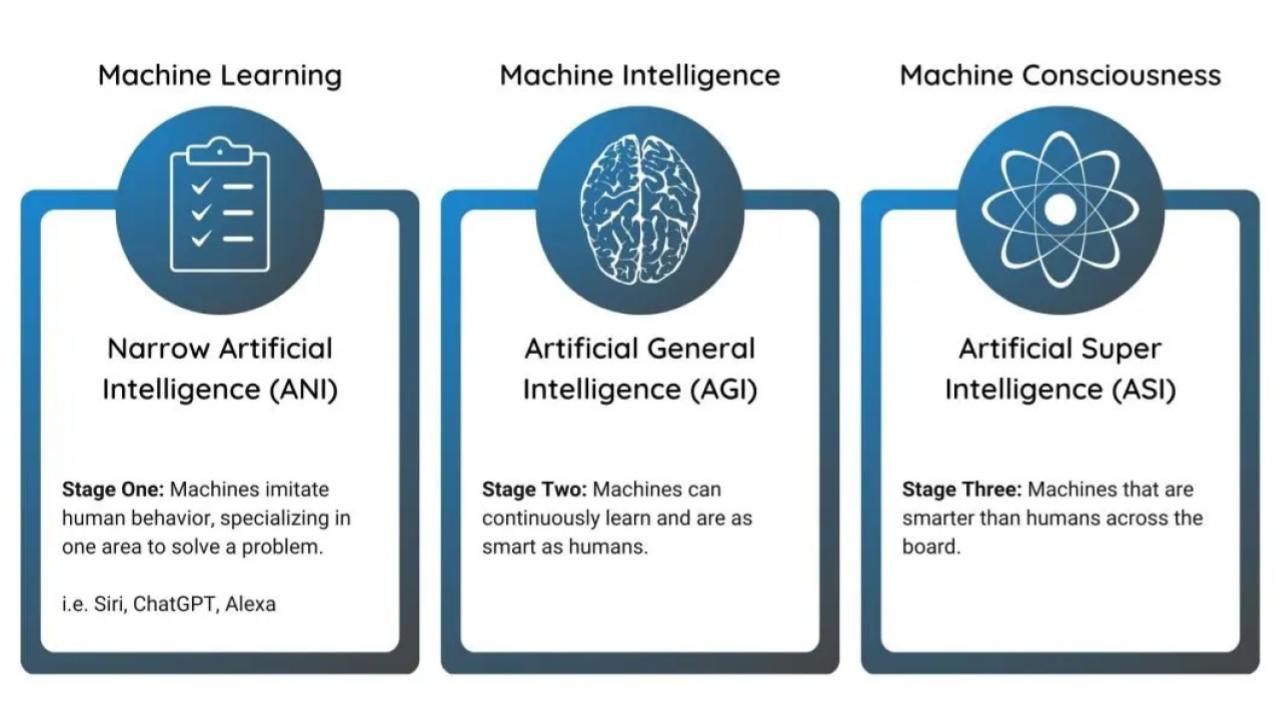
The Artificial Intelligence onAir network of hubs is focused on the three types of AI- ANI or Artificial Narrow Intelligence; AGI or Artificial General Intelligence; and ASI or Artificial Super Intelligence. The central hub for this network is at ai.onair.cc. The first sub-hub in the network is the AI Policy hub.
If you or your organization would like to curate an AI-related Hub or a post within this hub (e.g. a profile post on your organization), contact ai.curators@onair.cc.
OnAir Post: AI onAir Network of Hubs

AI Policy onAir Hub
The AI Policy Hub is focused on bringing together information, experts, organizations, policy makers, and the public to address AI regulation challenges..
If you or your organization would like to curate a post within this hub (e.g. a profile post on your organization), contact jeremy.pesner@onair.cc.
The regulation of artificial intelligence is the development of public sector policies and laws for promoting and regulating artificial intelligence (AI); it is therefore related to the broader regulation of algorithms. The regulatory and policy landscape for AI is an emerging issue in jurisdictions globally, including in the European Union and in supra-national bodies like the IEEE, OECD and others. Since 2016, a wave of AI ethics guidelines have been published in order to maintain social control over the technology. Regulation is considered necessary to both encourage AI and manage associated risks. In addition to regulation, AI-deploying organizations need to play a central role in creating and deploying trustworthy AI in line with the principles of trustworthy AI, and take accountability to mitigate the risks. Regulation of AI through mechanisms such as review boards can also be seen as social means to approach the AI control problem.
Julia McCoy – 08/04/2024 (12:39)
https://www.youtube.com/watch?v=hp88f_EsVUM
How should we as a society should prepare for AGI (Artificial General Intelligence)?
I’m talking the dangers and concerns, from full extermination of the human race to AGI going rogue… to the incredible benefits of AGI, and how to get ready to live in this new era of AI successfully.
I also talk about the timeline of AGI: Are we close to AGI? I talk about how we need to see a new era of energy to see that happen. Have we invented quantum computing yet? I talk about the risks of qubits.
What is the Singularity? I talk about the significance of a labor-free world driven by robotics bringing costs down to almost nothing.
Will bitcoin matter when quantum computing comes out? I talk about this too.
Key point: find your meaning.
Next, I’ll be talking about UBI, the currencies of the future, and how to prepare for what’s coming with a drastically reduced human workforce.
Book recommended: The Age of AI: And Our Human Future, by Henry A Kissinger, Eric Schmidt, Daniel Huttenlocher

Data Engineering on Air
The Data Engineering hub is focused on bringing together information, experts, organizations, policy makers, and the public to LEARN more about a topic, DISCUSS relevant issues, and COLLABORATE on enhancing research-driven DE knowledge and addressing DE challenges …. …. where onAir members control where and how their content and conversations are shared free from paywalls, algorithmic feeds, or intrusive ads.
The onAir Knowledge Network is a human-curated, AI-assisted network of hub websites where people share and evolve knowledge on topics of their interest.
This About the Data Engineering onAir 2 minute video is a good summary of DE hub mission and user experience.
If you or your organization would like to curate a post within this hub (e.g. a profile post on your organization), contact matthew.kovacev@onair.cc.
To become an onAir member of this hub, fill in this short form. It’s free!
Source: Other
OnAir Post: Data Engineering on Air
Artificial Narrow Intelligence (ANI)
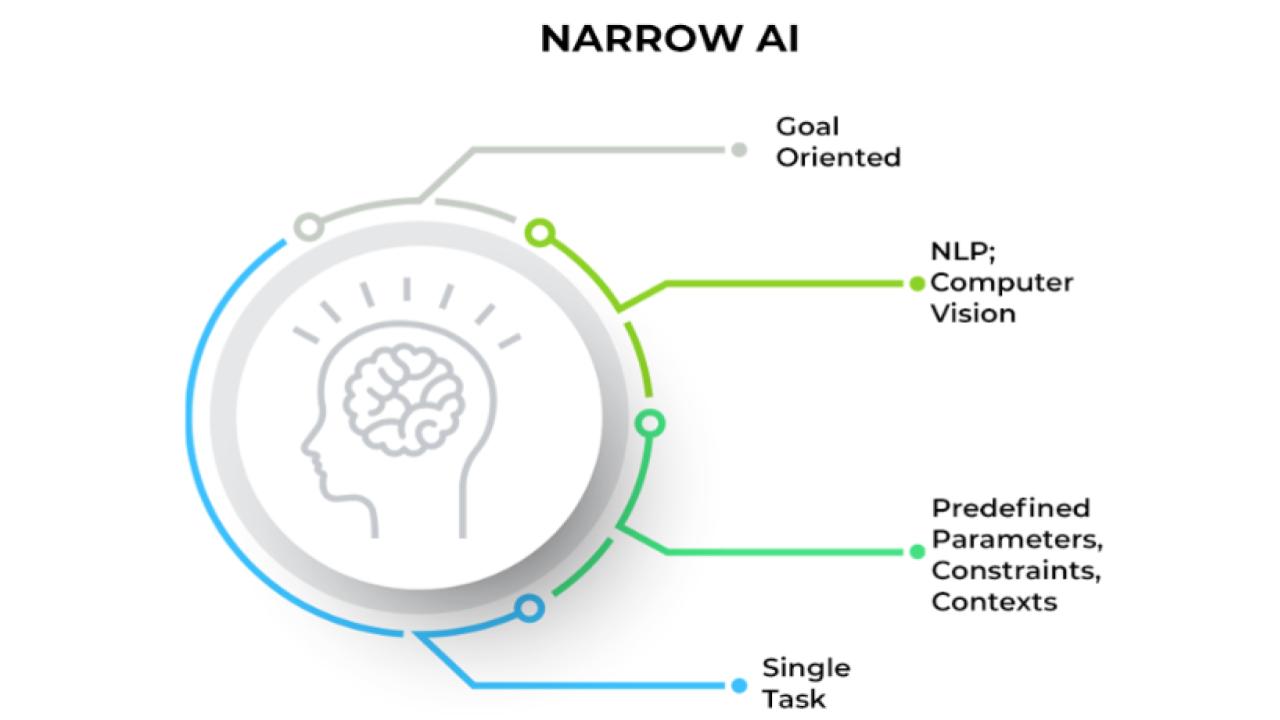
Narrow AI can be classified as being “limited to a single, narrowly defined task. Most modern AI systems would be classified in this category.” Artificial general intelligence is conversely the opposite.
-
Definition:
ANI is AI designed to perform a specific task or solve a narrowly defined problem.
-
Examples:
Virtual assistants like Siri and Alexa, facial recognition systems, recommendation engines, and chatbots.
-
Limitations:
ANI lacks general cognitive abilities and cannot learn beyond its programmed capabilities.
-
Current Status:
ANI is the type of AI that exists and is widely used today.
OnAir Post: Artificial Narrow Intelligence (ANI)
Artificial General Intelligence (AGI)
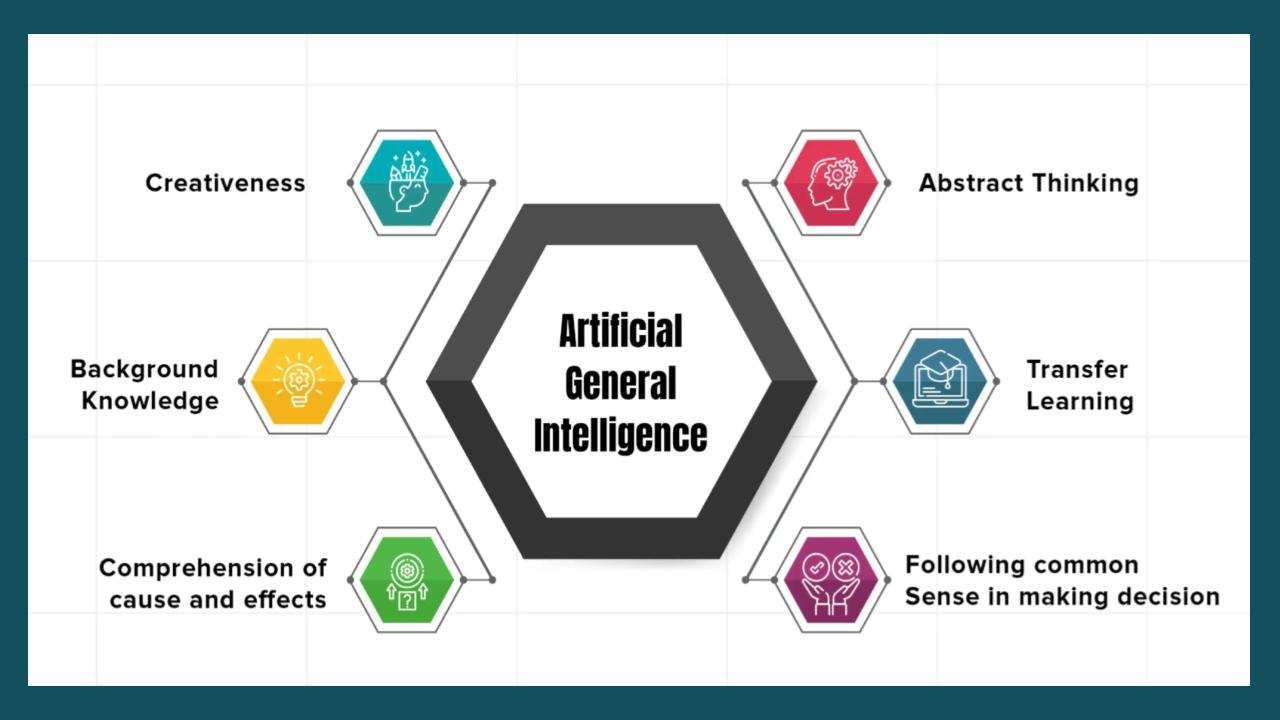
Artificial general intelligence (AGI) is a type of highly autonomous artificial intelligence (AI) intended to match or surpass human cognitive capabilities across most or all economically valuable cognitive tasks. This contrasts with narrow AI, which is limited to specific tasks.
Artificial superintelligence (ASI), on the other hand, refers to AGI that greatly exceeds human cognitive capabilities. AGI is considered one of the definitions of strong AI.
There is debate on the exact definition of AGI and regarding whether modern large language models (LLMs) such as GPT-4 are early forms of AGI.[9] AGI is a common topic in science fiction and futures studies.
Contention exists over whether AGI represents an existential risk. Many experts on AI have stated that mitigating the risk of human extinction posed by AGI should be a global priority. Others find the development of AGI to be in too remote a stage to present such a risk.
Source: Wikipedia
OnAir Post: Artificial General Intelligence (AGI)

Artificial Superintelligence (ASI)
A superintelligence is a hypothetical agent that possesses intelligence surpassing that of the brightest and most gifted human minds. “Superintelligence” may also refer to a property of problem-solving systems (e.g., superintelligent language translators or engineering assistants) whether or not these high-level intellectual competencies are embodied in agents that act in the world. A superintelligence may or may not be created by an intelligence explosion and associated with a technological singularity.
University of Oxford philosopher Nick Bostrom defines superintelligence as “any intellect that greatly exceeds the cognitive performance of humans in virtually all domains of interest”. The program Fritz falls short of this conception of superintelligence—even though it is much better than humans at chess—because Fritz cannot outperform humans in other tasks.
Source: Wikipedia
OnAir Post: Artificial Superintelligence (ASI)
Robotics onAir Hub
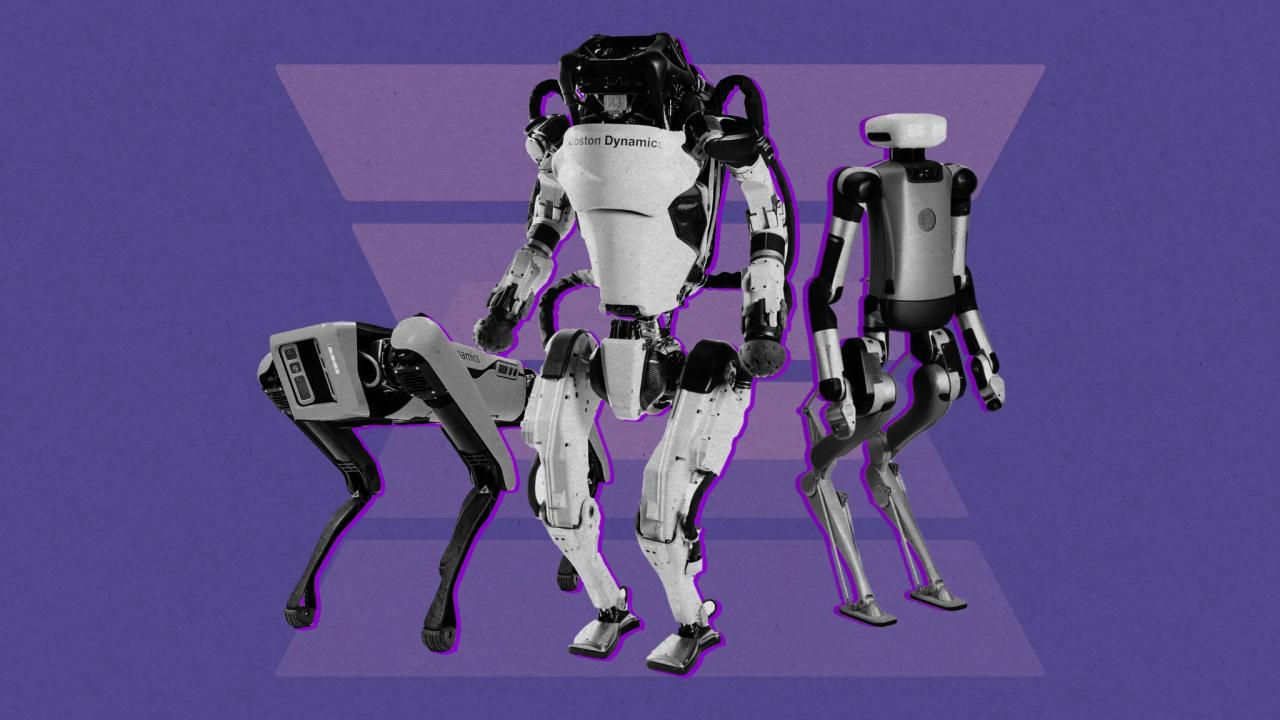
A robot is a machine—especially one programmable by a computer—capable of carrying out a complex series of actions automatically. A robot can be guided by an external control device, or the control may be embedded within. Robots may be constructed to evoke human form, but most robots are task-performing machines, designed with an emphasis on stark functionality, rather than expressive aesthetics.
Robots can be autonomous or semi-autonomous and range from humanoids such as Honda’s Advanced Step in Innovative Mobility (ASIMO) and TOSY’s TOSY Ping Pong Playing Robot (TOPIO) to industrial robots, medical operating robots, patient assist robots, dog therapy robots, collectively programmed swarm robots, UAV drones such as General Atomics MQ-1 Predator, and even microscopic nanorobots. By mimicking a lifelike appearance or automating movements, a robot may convey a sense of intelligence or thought of its own. Autonomous things are expected to proliferate in the future, with home robotics and the autonomous car as some of the main drivers.
OnAir Post: Robotics onAir Hub